


Capital Gains Tax Changes Impact Analysis
A comprehensive guide to understanding how Union Budget 2024 affects your investment returns
Powered by Nyra AI • PMS Sahi Hai
Executive Summary
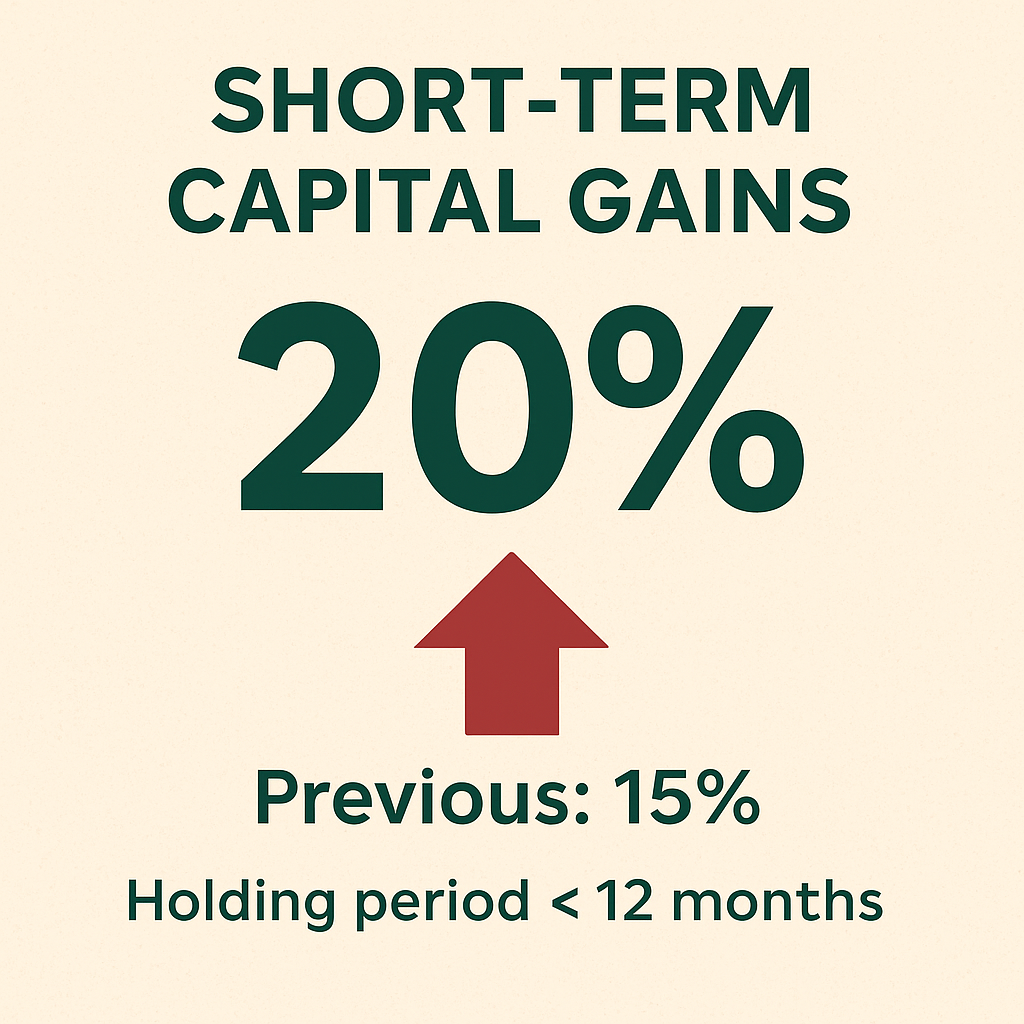
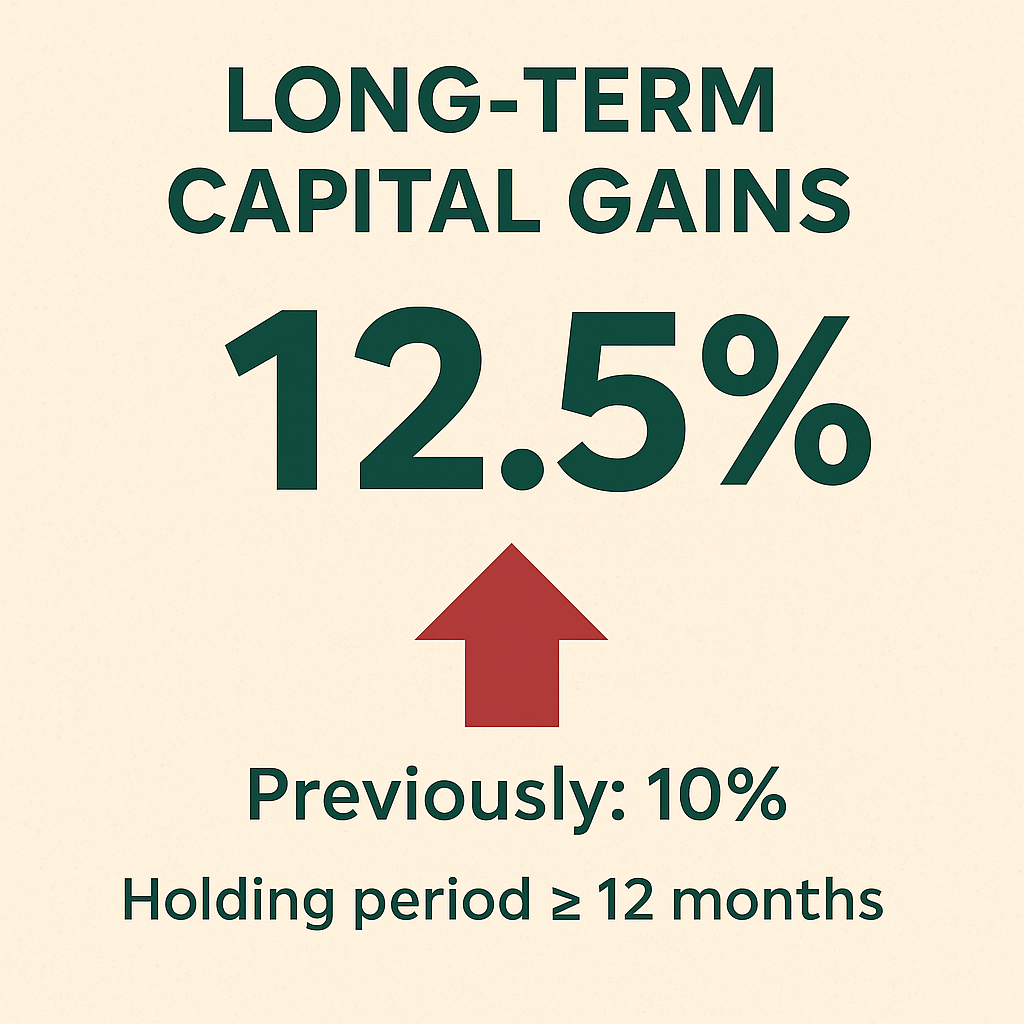
Key Change: From July 23, 2024, India implemented significant capital gains tax increases affecting all investment vehicles differently. Short-term gains tax increased from 15% to 20%, while long-term gains tax rose from 10% to 12.5%.
Impact by Investment Vehicle
Detailed Vehicle Analysis
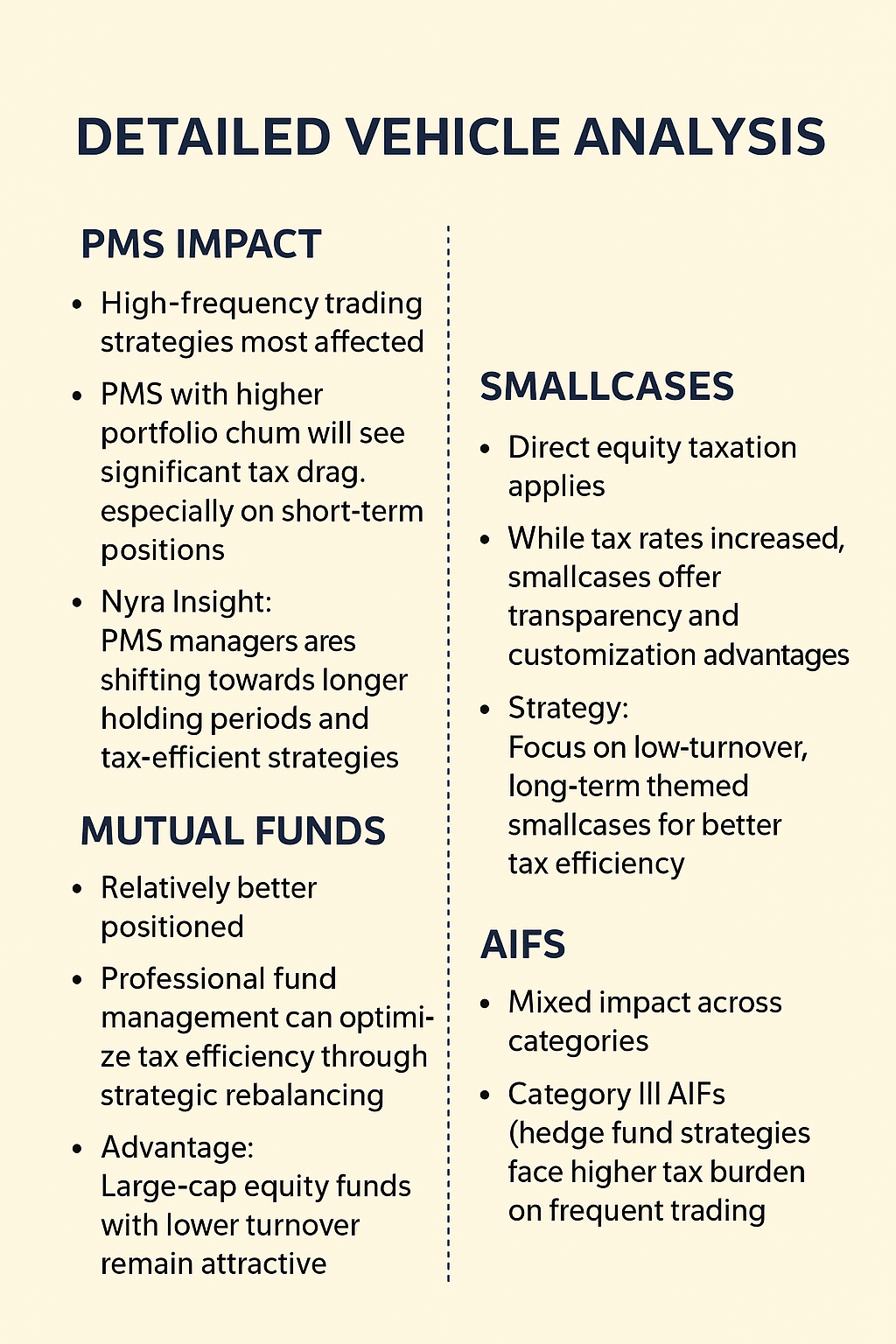
PMS Impact
High-frequency trading strategies most affected. PMS with higher portfolio churn will see significant tax drag, especially on short-term positions.
Nyra Insight: PMS managers are shifting towards longer holding periods and tax-efficient strategies.
Smallcases
Direct equity taxation applies. While tax rates increased, smallcases offer transparency and customization advantages.
Strategy: Focus on low-turnover, long-term themed smallcases for better tax efficiency.
Mutual Funds
Relatively better positioned. Professional fund management can optimize tax efficiency through strategic rebalancing.
Advantage: Large-cap equity funds with lower turnover remain attractive.
AIFs
Mixed impact across categories. Category III AIFs (hedge fund strategies) face higher tax burden on frequent trading.
Focus: Long-term value investing AIFs become more attractive.
Return Impact Analysis
Tax Drag Comparison (Annual Impact on Returns)
.png)
Strategic Recommendations
Nyra AI Analysis:
Our AI engine has analyzed over 1000+ portfolios post-tax changes. Here are the key strategic pivots:
1. Extend Holding Periods
Moving from 6-month to 12+ month holding periods can save 7.5% in taxes (20% vs 12.5%).
2. Focus on Quality
High-quality, long-term growth stocks benefit more from the new tax structure.
3. Diversify Vehicles
Blend PMS with mutual funds for optimal tax efficiency across different investment goals.
4. Tax Loss Harvesting
More critical than ever - systematic loss booking can offset higher tax rates.
.png)
The Road Ahead
The tax changes represent a structural shift in India's capital markets, favoring long-term wealth creation over short-term speculation. For sophisticated investors, this creates both challenges and opportunities:
Key Takeaway: Winners in this new environment will be those who adapt their strategies early, focusing on tax-efficient, long-term wealth creation vehicles guided by AI-driven insights.
At PMS Sahi Hai, our Nyra AI continuously monitors these changes and adjusts recommendations to ensure your portfolio remains optimized for after-tax returns in this evolving landscape.