
PMS Sahi Hai’s Six Commitments: A Trust Framework for Investors
Most advisors ask you to trust them. Here are six specific, testable commitments — on advice, fees, data, custody, and follow-through — that show you how PMS Sahi Hai actually earns it.

Most advisors ask you to trust them. Very few put that trust in writing. This guide walks through six written commitments — one at a time — that decide how a PMS/AIF advisor should treat you: what each commitment actually means, why it matters to an investor putting ₹50 lakh or more into a PMS (Portfolio Management Service) or AIF (Alternative Investment Fund), and how PMS Sahi Hai utilizes that exact commitment inside Nyra, its AI-powered PMS/AIF marketplace. You'll also see where this framework comes from in Indian securities regulation, and where its honest limits are — because no commitment, written or otherwise, can promise you a return.
Why "Trust Me" Isn't a Strategy: Where Advisor Commitments Come From
Trust in Indian portfolio advisory isn't a new problem, and it isn't one the industry solved by accident. Portfolio Management Services have been regulated by SEBI since 1993, but the rulebook most investors actually interact with today comes from the SEBI (Portfolio Managers) Regulations, 2020 — a genuine overhaul, not a minor update.
A few changes from that overhaul matter enormously for anyone thinking about advisor trustworthiness:
- The minimum client investment doubled from ₹25 lakh to ₹50 lakh, raising the bar for who a PMS is even built to serve.
- Disclosure norms were tightened alongside that increase — portfolio managers now have to be more explicit, more often, about fees and strategy.
- Performance reporting moved to a standardized time-weighted rate of return (TWRR) method, closing a loophole where managers could selectively report their better-performing portfolios.
- Independent custodian appointment became mandatory for effectively all portfolio managers — previously this was only required above ₹500 crore in assets under management. This single change is the regulatory ancestor of "we never hold your money."
- Formal distributor oversight was introduced for the first time, requiring AMFI registration or NISM certification and adherence to a conduct code SEBI, Portfolio Managers Regulations, 2020).
None of this happened in a vacuum. It's the same underlying tension that shows up whenever an intermediary sits between an investor and a financial product: does the advisor's income come from what's sold, or from what's genuinely good for the client? That's the textbook definition of a fiduciary duty — a legal and ethical obligation to act in someone else's best interest, even when it costs the fiduciary money (Corporate Finance Institute). SEBI's evolving rulebook pushes the entire industry toward that standard. A written commitments framework is what happens when an individual advisor decides not to wait for the next regulatory cycle to catch up — and commits, on paper, to a higher bar today. This is also why regulatory literacy matters before you invest a rupee in PMS or AIF structures: the law sets the floor. What an advisor commits to in writing tells you how much higher than that floor they're actually willing to stand.
How AI Is Changing Who You Can Trust With Your Portfolio
The other force reshaping advisor trustworthiness isn't regulatory — it's technological. Wealth advisory in India is shifting toward AI-assisted, data-driven platforms that sit alongside, rather than replace, traditional relationship-based advisory. Industry commentary consistently frames this as a hybrid model: AI handles the data-heavy, error-prone work — portfolio overlap detection, risk profiling, continuous monitoring — while human judgment stays in the loop for the decisions that actually require it.
Why does this matter for a trust framework specifically? Because several of the six commitments below — asking before suggesting, never disappearing after signature, continuous review — are historically hard for a human advisor to deliver consistently across hundreds of client relationships. Memory fades, bandwidth runs out, and "we'll review it next quarter" quietly slips. AI-powered matching and monitoring tools don't have that problem in the same way: a system built to flag sector concentration or liquidity risk does it on every portfolio, every time, not just for the clients who happen to call in. It isn't picking your strategy for you in some opaque, unaccountable way, and it isn't replacing the judgment call of whether a strategy fits your goals — what it's genuinely good at is the unglamorous, error-prone comparison and monitoring work. That's the technological backdrop against which PMS Sahi Hai's AI layer, Nyra, operates — and it's why each commitment below can be delivered as consistent product behavior, not just a best-effort promise.
Commitment One: We Ask Before We Suggest
What it means: No PMS or AIF strategy gets shown to you until the advisor understands your goal, your time horizon, and, critically, how much of a drawdown you can actually sit through without panic-selling at the worst possible moment. Profiling comes first. The product comes after.
Why it matters: This sounds obvious, but it isn't standard practice. A large share of mis-selling complaints in Indian wealth management trace back to a strategy that was objectively fine but wrong for that particular investor's risk tolerance — sold anyway, because the product was in front of the advisor before the client's actual goal ever was. An advisor who leads with a product rather than a profile has, by definition, skipped the one step that determines whether any recommendation that follows is even relevant to you.
How PMS Sahi Hai delivers it: This commitment happens through Nyra's structured Profile & Goals step, the first stage of its five-step process — before any strategy is shown, Nyra captures risk appetite, investment horizon, and financial goals. It's the same starting point recommended above, built into the product flow itself rather than left to an individual advisor's memory or discretion.
Commitment Two: No One Pays Us to Push a Fund
What it means: No AMC owns the advisor. Commission, if any, is disclosed before you sign, not after. And you pay the fund's own fee — not one rupee extra for coming to the advisor.
Why it matters: Distribution in Indian wealth management has historically run on commission: the advisor (technically, in many cases, a distributor) earns a percentage from the fund or AMC whose product they recommend, which means the advisor's income is tied to what they sell, not to how well it performs for you or how well it fits your goals. SEBI has been pushing disclosure requirements around exactly this kind of commission for years — as far back as 2016, SEBI moved to require mutual fund agents to spell out their commission upfront. It's worth being precise here: the word "distributor" itself isn't a red flag — plenty of legitimate, well-run advisory businesses operate as distributors under the conduct code introduced in 2020. What matters is whether the commission is fully disclosed and capped, or hidden and open-ended.
| Comparison parameter | Commission-driven distributor | Commitment-bound advisor |
|---|---|---|
| Income source | Percentage/trail commission from the AMC or fund | Disclosed fee, not tied to which product you pick |
| Product shown first | Whatever pays best | Only after your goal and risk tolerance are understood |
| Disclosure timing | Often after the sale, if at all | Before you sign |
| Regulatory anchor | AMFI/NISM conduct code for distributors | SEBI investment adviser / fiduciary standard |
How PMS Sahi Hai delivers it: PMS Sahi Hai operates as a SEBI-registered distributor and advisor, and this commitment shows up directly in that structure: commission, where applicable, is disclosed before you sign, and you pay the fund's own fee — not an additional markup for coming through the platform. Nyra's role is to widen the comparison set across 1,000+ PMS & AIF strategies, not to narrow it down to whichever one pays best.
Commitment Three: Every Number Comes With Its Source
What it means: If you're shown a return figure, you're also shown the period, the benchmark, and where the figure came from. No cherry-picked years, no unexplained starting points.
Why it matters: This sounds like a small thing until you notice how rare it is. Almost every PMS/AIF comparison page and factsheet in this space shows a return figure — very few show the methodology behind it, and fewer still avoid the classic trick of quietly starting the clock right after a strong quarter. A source-cited number lets you check it — against the benchmark, against the time period, against a competing strategy — instead of taking a chart at face value. Without this, "past performance" is just a marketing sentence.
How PMS Sahi Hai delivers it: This shows up directly in Nyra's PMS comparison and AIF comparison tools, which evaluate strategies side by side with their reporting basis attached, rather than presenting a single curated recommendation stripped of context. The same standard that SEBI's 2020 rules apply to the industry as a whole — standardized TWRR reporting, a defined three-year disclosure window — is the baseline Nyra's comparisons are built on top of, not around.
Commitment Four: We Never Hold Your Money
What it means: The investment account is in your name. The money and securities sit with an independent custodian — never with the advisor. The advisor's job is to help you choose and keep watch. That's it.
Why it matters: This is where regulation and trust converge most directly, and it's arguably the single highest-stakes commitment on this list. SEBI's 2020 overhaul made independent custodian appointment mandatory for essentially all portfolio managers, closing what used to be a real gap (only mandatory above ₹500 crore AUM before) (SEBI Investor Education, Portfolio Management Services). This structural fact eliminates the biggest fraud vector in unregulated or semi-regulated advisory relationships — an advisor simply cannot disappear with money they never had custody of in the first place.
A quick self-check before you invest in any PMS or AIF:
- Confirm the advisor's SEBI registration number on the SEBI website, under Registered Portfolio Managers or Registered Investment Advisers.
- Ask for the current disclosure document — it must cover strategy, fee structure, and risk, and by regulation can only show performance for the preceding three years.
- Confirm in writing (not verbally) which entity holds custody of your assets, and that it isn't the advisor.
- Ask for the benchmark and time period behind any return figure you're shown — if there isn't one, treat the number skeptically.
How PMS Sahi Hai delivers it: Consistent with the SEBI custodian requirement above, your account stays in your name with an independent custodian at all times. PMS Sahi Hai's role — and Nyra's, functionally — is to help you choose the right strategy and keep watch over it afterward, never to hold or control your assets directly.
Commitment Five: We Don't Disappear After You Sign
What it means: You get a review every quarter, a person who actually answers the phone, and a straight answer when it's time to move on from a fund — not silence, and not a vague reassurance.
Why it matters: This is the point where most advisory relationships quietly stop earning the trust they were given at the start. How often should a PMS or AIF portfolio be reviewed? At minimum quarterly — markets, sector weightings, and your own life circumstances all shift faster than that, and a portfolio that isn't reviewed on a set cadence tends to drift into overlap and concentration risk without anyone noticing until it shows up in performance. An advisor's real character shows up less in the sales conversation and more in whether they're still reachable eighteen months in.
How PMS Sahi Hai delivers it: This is Nyra's Continuous Monitoring step, the final stage of its five-step process — tracking sector shifts, liquidity, and concentration risk, and sending actionable rebalancing alerts. The review cadence recommended above isn't dependent on remembering to call; it's built into how the product runs in the background of your portfolio, every quarter, by default.
Commitment Six: Your Interest Comes First, Even When It Costs Us
What it means: If the right answer for you is a smaller fund, a plain mutual fund, or simply waiting, the advisor says so — even when a bigger-ticket PMS or AIF sale was on the table instead.
Why it matters: This is the hardest commitment to prove in a marketing document, because by definition it only shows up in the moments where doing right by the client costs the advisor something. It's also, in a real sense, the summary of the other five — goal-first advice, disclosed commission, sourced data, independent custody, and ongoing review all exist to protect this one outcome. An advisor who holds to the other five commitments but folds on this one, when it actually costs them, hasn't kept any of them.
How PMS Sahi Hai delivers it: This is the philosophy behind Nyra's portfolio analysis step, which is explicitly built to spot hidden overlap between your existing PMS and AIF holdings — including flagging duplication and concentration that a product-first advisor would have no commercial incentive to point out. Hard-earned wealth shouldn't rely on random advice, and pointing an investor away from an unnecessary purchase is, structurally, what an AI-assisted comparison and monitoring tool is supposed to do — surface what's actually in your interest, whether or not it results in a transaction.
The Real Advantages of a Commitments-Bound Advisor
Put together, working with an advisor operating under a written commitments framework — rather than an unwritten "trust us" — has several concrete advantages:
- Recommendations start with your goals, not with whichever product happens to be in the advisor's queue that week, meaningfully reducing the risk of a strategy that's technically sound but wrong for your risk tolerance.
- Fee and commission transparency lets you compare the true cost of advice against the cost of the underlying fund, with no hidden markup buried in a trail commission.
- Source-cited performance data — period, benchmark, methodology — lets you sanity-check a claim instead of trusting a glossy factsheet.
- Independent custody, now a SEBI 2020 baseline requirement and a specific written commitment on top of that, removes the single biggest fraud vector in the relationship.
- A fixed review cadence catches portfolio drift, sector concentration, and overlap between multiple PMS/AIF holdings before it compounds into real, measurable losses.
- A written commitment is testable. It's not a feeling — it's a specific, falsifiable claim, and an advisor has to actively violate something on paper to fail you, which is a meaningfully higher bar than an unwritten promise.
Where This Framework Has Limits
Honesty about limitations is itself part of the trust framework, so it's worth being direct about what a commitments framework cannot do:
- It cannot promise you a return. A written commitment governs behavior — how advice is given, how data is sourced, how your money is held — not investment performance. No advisor, however transparent, can guarantee outcomes in markets.
- Fee-transparent advisory can look more expensive on the surface than a "free" commission-based distributor, even though the commission in the second case is simply embedded, invisibly, in the product's cost. Paying an explicit fee can feel like a downside even when it's the more honest arrangement.
- You still have to do some verification yourself. A framework reduces the due-diligence burden — it doesn't eliminate it. Checking SEBI registration, reading the disclosure document, and asking for source data on any return figure remain the investor's responsibility, framework or not.
- A written commitment is only as good as the willingness to be held to it. Nothing about putting six promises on a webpage automatically makes them enforceable in the way a SEBI regulation is. Their real value is behavioral, not legal — a specific, testable yardstick to measure an advisor against, deal by deal, rather than a binding contract in the strict sense. That's still a meaningfully higher bar than an unwritten "trust us," but it's worth understanding the difference between a commitment and a regulation before treating the two as interchangeable.
Ready to Work With an Advisor Who's Signed the Commitments?
Most of what erodes trust in PMS and AIF advisory doesn't happen in a single dramatic moment — it happens quietly, in the gap between what an advisor implies and what they're actually willing to put in writing. The six commitments above are one way to close that gap, and — as shown commitment by commitment — PMS Sahi Hai built them into how Nyra actually works, not just into a page on the website.
If you're comparing PMS and AIF options and want an evaluation process built around exactly this framework, start with Nyra, explore PMS comparisons and AIF comparisons side by side, or read more on what PMS is and what AIF is before you take the next step. You can also reach the team directly via Contact Us for a private consultation.
PMS Sahi Hai is a distributor of Portfolio Management Services and Alternative Investment Funds, APMI-registered (Registration No. APRN08358). This article is for education only and is not investment advice, a recommendation, or an offer to buy or sell any security. Investments in securities markets are subject to market risks; read all scheme-related documents carefully. Past performance is not indicative of future results. Consult your advisor before investing.
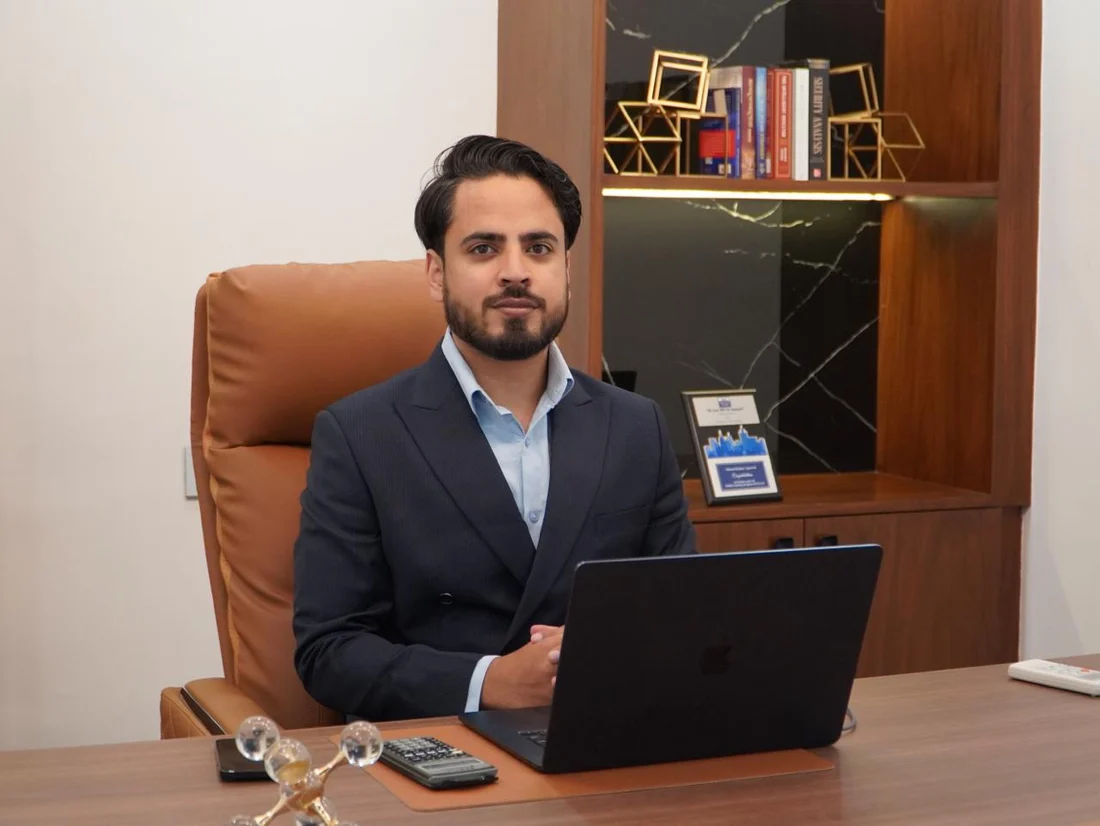
Ishaan founded PMS Sahi Hai to make India's PMS, AIF and GIFT City markets legible to serious investors, comparing every SEBI-registered manager on the same comparative basis, with no shelf products and no commission bias.
Frequently asked
What are the six commitments in a PMS/AIF trust framework?
The six commitments are: advice that starts with your goals before any product is suggested; no commission-driven bias toward pushing a particular fund; performance data that always comes with its source, period, and benchmark; independent custody, meaning the advisor never holds your money directly; an ongoing review relationship rather than one that ends at signature; and a standing commitment to prioritize your interest even when a different recommendation would benefit the advisor more.
How do I check if a PMS or AIF advisor is SEBI registered?
Visit the SEBI website's list of Registered Portfolio Managers or Registered Investment Advisers and search by the firm's name. A genuine advisor will display a unique SEBI registration number consistently across their website, client agreements, and marketing materials — if that number isn't visible or doesn't match SEBI's public list, treat it as a red flag before investing.
Do PMS advisors earn commission on the funds they recommend?
It depends on the model. Distributors typically earn a commission or trail fee from the AMC or fund house whose product they sell, which SEBI has required to be disclosed since at least 2016. SEBI-registered investment advisers, by contrast, generally operate on a disclosed fee basis rather than product commission, which is the fiduciary-aligned model commitment two above is built to guarantee.
What's the difference between a PMS distributor and an investment adviser?
A distributor sells products and is compensated through commission from the fund or AMC, similar to a sales role; an investment adviser is compensated through a disclosed fee for advice and is generally held to a higher, fiduciary-style standard of acting in the client's interest. Both roles are regulated, but the incentive structures point in different directions, which is why confirming which one you're actually working with matters before you invest.
How often should a PMS or AIF portfolio be reviewed?
At minimum, quarterly. Markets, sector weightings, and your own financial circumstances shift faster than an annual check-in can catch, and a portfolio left unreviewed for long stretches tends to accumulate overlap and concentration risk that only becomes visible once it has already affected performance.
What's the minimum investment needed for PMS or AIF in India?
For Portfolio Management Services, SEBI's 2020 regulations set the minimum client investment at ₹50 lakh, doubled from the previous ₹25 lakh threshold. AIF minimum commitments vary by category and scheme, so it's worth confirming the specific figure directly with the fund's disclosure document rather than assuming it matches the PMS threshold.
Can a commitments framework guarantee investment returns?
No — and any advisor who implies otherwise should be treated with caution. A commitments framework governs how advice is given, how data is presented, and how your assets are held; it says nothing about, and cannot control, how markets perform. Its value is in reducing avoidable risks — mis-selling, hidden costs, custody fraud, neglect — not in promising outcomes no advisor can control.
Keep reading
All articles
Why Your PMS Returns Differ From the Published Strategy Returns
Your PMS statement shows a different return than the factsheet. TWRR vs XIRR, fees, timing, benchmarks and SEBI rules explained with a worked example.
Benchmark Selection in PMS: Why the Wrong Benchmark Hides Bad Performance
Why picking the wrong PMS benchmark masks poor returns. SEBI rules, TWRR vs XIRR, real data & a checklist to catch mismatches before you invest.

Manager Tenure and Style Drift: The Silent PMS Risk
Two PMS risks rarely show up in performance sheets: who runs your strategy and whether its holdings still match the mandate. See what SEBI's rules catch, where they fall short, and how to check both.
Read it. Now pressure-test it.
Ask Nyra how this applies to your portfolio, or talk to our team, no pitch, no pressure.