
PMS Onboarding Process: KYC, Documents & Timeline
Opening a PMS account isn't a click it's a fixed sequence of KYC, risk profiling, agreement signing, and fund transfer that no provider can skip. Here's the real document checklist and how long it actually takes.
Investing in a Portfolio Management Service (PMS) in India means clearing a SEBI-mandated ₹50 lakh minimum investment, completing a KYC process that runs through a centralised KYC Registration Agency (KRA), and signing a formal portfolio management agreement before a single rupee is deployed. Most of this can now be done digitally video In-Person Verification (IPV), Aadhaar e-Sign, and API-based document checks have replaced a lot of the old paperwork-and-branch-visit routine but the underlying regulatory checkpoints (identity verification, risk profiling, agreement execution, fund transfer) still happen in a fixed order and cannot be skipped. Realistic turnaround varies widely: some digital-first managers activate accounts in a few working days once paperwork is complete, while others, especially with manual processes or incomplete documentation, take several weeks. This guide walks through the history, the document checklist, the step-by-step process, honest timelines, and where the process still has friction.
How PMS Onboarding and KYC Regulation Evolved in India
Portfolio Management Services have been regulated in India since the SEBI (Portfolio Managers) Regulations, 1993. Those rules were repealed and replaced by the <a href="https://www.sebi.gov.in/legal/regulations/jan-2020/securities-and-exchange-board-of-india-portfolio-managers-regulations-2020_45744.html" target="_blank" rel="noopener">SEBI (Portfolio Managers) Regulations, 2020</a>, which came into force on 16 January 2020 and remain the current framework (as amended several times since, most recently in 2025).
The most consequential change for onboarding happened just before that: on 20 November 2019, SEBI's board approved doubling the minimum client investment in PMS from ₹25 lakh to ₹50 lakh, and simultaneously raised the minimum net worth required of a portfolio manager from ₹2 crore to ₹5 crore, with a 36-month transition window for existing players reported at the time by <a href="https://www.businesstoday.in/latest/corporate/story/sebi-doubles-pms-investment-size-to-rs-50-lakh-sets-31-days-deadline-for-default-disclosure-238608-2019-11-20" target="_blank" rel="noopener">Business Today</a>. The stated rationale was to keep PMS squarely positioned for investors who can genuinely absorb concentrated, higher-risk portfolios not as a mass-market product.
Alternative Investment Funds run on a separate but related track: the SEBI (Alternative Investment Funds) Regulations, 2012, which set a ₹1 crore minimum investment per investor (with a lower ₹25 lakh threshold commonly applied to employees/directors of the fund or its manager, and to certain accredited-investor and angel-fund structures). AIFs have grown rapidly under this framework industry data reported by Business Standard put total AIF commitments in India at roughly ₹13.49 trillion as of March 2025, growing at a compound annual rate of about 31.5% between FY21 and FY25 which is exactly why onboarding rigor for both PMS and AIF has kept tightening rather than loosening.
Underneath both frameworks sits India's KYC Registration Agency (KRA) system, which every securities-market intermediary brokers, mutual funds, PMS, AIF plugs into. The idea is simple: once your identity is verified and recorded with any one KRA (CDSL Ventures Limited, or "CVL," is one of the registered KRAs), you shouldn't need to resubmit the same documents to the next intermediary you sign up with see CVL's own explanation of the KRA framework. This centralisation is the backbone that makes today's faster, more digital onboarding possible.
Who Needs This Process: Eligibility and Minimum Investment Explained
The onboarding process described in this guide applies to anyone opening a discretionary, non-discretionary, or advisory PMS account, or committing capital to a Category I, II, or III AIF. A few numbers anchor eligibility:
- PMS minimum investment: ₹50 lakh, per SEBI's current framework confirmed directly on SEBI's own investor-education page, which states plainly that "SEBI mandates a ₹50 lakh minimum investment, targeting high net worth investors capable of managing associated risks."
- AIF minimum investment: ₹1 crore per investor across all three categories, under the SEBI AIF Regulations, 2012 referenced above (lower thresholds apply in specific carve-outs such as fund/manager employees).
- Trading or capital deployment cannot legally begin until the minimum threshold is actually received in the client's account a partially funded account simply sits until the balance is topped up.
- Eligible investor types go well beyond individuals: Hindu Undivided Families (HUFs), sole proprietorships, partnership firms and LLPs, private and public companies, trusts, and Non-Resident Indians (NRIs) can all open PMS or AIF accounts, each with slightly different documentation.
Because the ticket size is high, onboarding is treated by regulators less like a form-filling exercise and more like a compliance checkpoint it exists to confirm identity, verify the legitimacy of funds, assess suitability, and create a documented, enforceable agreement before money moves.
The Complete PMS and AIF KYC Documents Checklist
| Document category | Resident individual | NRI | Notes |
|---|---|---|---|
| Identity proof | PAN card (mandatory, must be Aadhaar-linked and active) | Passport (mandatory) | PAN is non-negotiable for any securities market participation |
| Identity/address proof | Identity/address proof | Overseas address proof + Indian address proof (if any) | One of these Officially Valid Documents (OVDs) is required under SEBI's KYC norms |
| Address proof | Recent utility bill, bank statement, or property tax receipt (if ID document shows an outdated address) | Overseas utility bill/bank statement | Needed only if your ID document's address isn't current |
| Bank details | Cancelled cheque or bank statement | NRE/NRO account details + cancelled cheque | Used for fund transfer and payouts; often verified via a bank "penny drop" |
| Income/net-worth proof | ITR, salary slips, or net-worth certificate | Equivalent overseas income proof | Supports suitability assessment |
| Photograph | Passport-size photo | Passport-size photo | Standard KYC requirement |
| Tax declaration | FATCA/CRS self-declaration | FATCA/CRS self-declaration (mandatory) | Identifies tax residency for cross-border reporting under US FATCA and OECD's Common Reporting Standard |
| Demat account | Existing or newly opened demat account details | NRI demat account (linked to NRE/NRO) | PMS securities are held in your own demat account, not pooled |
| Entity documents (if applicable) | Certificate of incorporation, board resolution, MOA/AOA, POA | Same, plus FEMA declaration where relevant | Applies to HUFs, companies, LLPs, trusts |
| Agreement paperwork | Signed PMS/AIF agreement, Disclosure Document / Private Placement Memorandum acknowledgement | Signed PMS/AIF agreement, Disclosure Document / Private Placement Memorandum acknowledgement | This is where the Most Important Terms and Conditions (MITC) document comes in for PMS |
The SEBI Master Circular on KYC norms for the securities market (last consolidated on 12 October 2023) is the reference document that standardises which Officially Valid Documents are acceptable and how KRAs must process them see SEBI's Master Circular on KYC, October 2023. If you've already completed KYC with a bank, broker, or mutual fund and your KYC status shows as "validated" in the KRA system, a PMS or AIF onboarding team can often fetch that record instead of asking you to start from scratch though a fresh In-Person Verification (IPV) is still commonly required by the specific intermediary you're onboarding with.
Step-by-Step: How the PMS Onboarding Process Actually Works
While exact sequencing differs slightly by provider, the portfolio management service account opening process generally follows this order:
- Initial consultation and strategy selection. You (or your advisor) discuss financial goals, risk appetite, and time horizon, and narrow down a PMS strategy or AIF category that fits.
- Document collection and KYC submission. You submit the checklist above PAN, ID/address proof, bank details, income proof, and (for NRIs) FATCA/CRS and passport details typically through a digital portal today rather than physical courier.
- In-Person Verification (IPV). An authorised official confirms you match your submitted documents either in person or via Video IPV, discussed in detail below.
- Risk profiling and suitability check. The portfolio manager records your risk tolerance and investment objective, partly to meet SEBI's suitability expectations and partly to select the right strategy variant for you.
- Bank verification. A small "penny drop" transaction confirms your bank account is genuine and correctly linked before larger sums move.
- Demat account linkage. Because PMS assets sit in your own demat account (not a pooled structure like a mutual fund), this account must be opened or linked before securities can be bought on your behalf.
- Agreement execution. You sign the formal PMS agreement (or, for an AIF, the contribution/subscription agreement) covering fees, mandate, risk disclosures, and termination terms increasingly via Aadhaar e-Sign rather than wet-ink signatures across a stack of paper.
- Fund transfer. The minimum investment (₹50 lakh for PMS, ₹1 crore for most AIFs) is transferred for AIFs, this is often staged through formal capital call / drawdown notices rather than a single lump sum, and must always go to the fund's designated escrow account, never an individual's personal account.
- Portfolio construction / capital deployment begins. Once funds clear and the threshold is confirmed, the manager begins building your portfolio often in a staggered, phased manner rather than deploying 100% on day one.
How Long Does PMS Onboarding Really Take?
This is the single most-searched question about the process, and the honest answer is: it depends heavily on the provider and on how quickly your documents come back clean. A few data points, sourced rather than guessed:
- Once you've chosen a manager and submitted complete documents, KYC verification and account documentation commonly take from a few working days to about two weeks, based on process breakdowns published by PMS distribution blogs reviewing multiple providers.
- Adding the earlier "research and select a manager" phase and the later "phased capital deployment" phase, some detailed breakdowns put the full end-to-end journey from first shortlist to fully deployed portfolio at roughly six to twelve weeks, with digital-first managers compressing this toward the lower end.
- On the regulatory side specifically, industry analysis of SEBI's May 2024 digital-onboarding circular (discussed next) reports that the digital-onboarding leg of the process for portfolio managers has been reported to compress from roughly 7–10 working days down to about 2–3 working days in some cases a figure from PMS Bazaar's analysis of the circular, not an official SEBI-published turnaround guarantee.
Video KYC, e-Sign and API-Driven Onboarding: How Digital KYC Works Today
The biggest structural change to onboarding in the last several years has been the shift from paper-and-branch-visit KYC to remote, technology-enabled KYC a shift that also happens to be where platforms like PMS Sahi Hai's AI assistant, Nyra, are designed to make the comparison and preparation stage faster for investors (more on that shortly).
Two SEBI circulars did most of the work:
- April 2020 Video IPV and e-Sign permitted. SEBI's circular "Clarification on Know Your Client (KYC) Process and Use of Technology for KYC" (dated 24 April 2020) allowed Video In-Person Verification (VIPV) as a substitute for a physical, face-to-face meeting, and permitted Aadhaar e-Sign in place of a wet-ink signature on onboarding documents see the SEBI circular itself. In a typical Video IPV session, an authorised official verifies you live on camera, has you read out a randomly generated on-screen code (to prove it's a live session, not a recording), captures your PAN and ID documents on screen, and time-stamps the record which is then reusable across other intermediaries once logged with a KRA.
- May 2024 digital onboarding standardised further for portfolio managers. SEBI's circular dated 2 May 2024, effective 1 October 2024, specifically told portfolio managers to give investors a fee-calculation tool showing multi-year cost scenarios, a simplified Most Important Terms and Conditions (MITC) document, and to accept digital (keyboard/stylus) acknowledgement instead of handwritten notes see the May 2024 SEBI circular.
Layered on top of these rules, most SEBI-registered PMS and AIF platforms now run API-driven onboarding: pulling your KYC status directly from a KRA, running bank penny-drop verification automatically, and pre-filling forms from your PAN/Aadhaar record instead of asking you to retype everything. It's worth noting that SEBI has also floated a further proposal still under public consultation, not yet in force to let NRIs, OCIs, and foreign nationals from FATF-compliant countries complete KYC entirely digitally without being physically present in India, using Video IPV plus digital signature matching; see Cafemutual's coverage of the proposal. Until that's finalised, current NRI onboarding still typically relies on a mix of courier, e-Sign, and video verification rather than a single seamless remote flow.
Advantages of Today's Digital-First Onboarding Process
- Centralised KYC removes duplicate paperwork. Once your KYC is validated with any KRA, subsequent PMS, AIF, broker, or mutual fund onboarding can often fetch that record instead of starting over.
- Video IPV and Aadhaar e-Sign remove the branch-visit requirement for most investors, which matters enormously for NRIs and busy professionals who can't easily show up in person.
- Standardised fee disclosure (MITC, fee-calculator tools) introduced by the 2024 circular makes it genuinely easier to compare what different PMS providers will actually cost you over several years rather than parsing dense fee schedules manually.
- Assets sit in your own demat account with an independent custodian, a structural safeguard that's explained to you as part of onboarding disclosures rather than buried in fine print.
- A comparison-first approach before you sign anything reduces the "sign first, understand later" risk. This is exactly the gap a platform like PMS Sahi Hai India's SEBI-registered PMS & AIF comparison marketplace and its AI assistant Nyra are built to close: Nyra helps you compare strategies, understand overlap and concentration risk across your existing holdings, and walk into onboarding already knowing what questions to ask, rather than discovering fee structures and lock-in terms mid-paperwork.
The Honest Limitations Nobody Tells You About
No amount of digital tooling removes every friction point, and a genuinely useful guide should say so plainly:
- Paperwork friction still exists. Video IPV, agreement execution, and fund transfer are sequential regulatory checkpoints SEBI's rules don't allow a provider to compress them into a single click, and one mismatched address proof or an un-linked PAN-Aadhaar can add real delay.
- The minimum investment is a hard, non-negotiable gate. Regulation does not permit trading to begin before the full ₹50 lakh (PMS) or ₹1 crore (AIF) threshold is actually received a partially funded account simply waits.
- Timelines genuinely vary by provider, sometimes by weeks, not days anyone promising one universal number for "how long PMS onboarding takes" is oversimplifying a process that depends on document quality, provider workflow, and how digitised that specific manager's systems are.
- KYC can go "on hold" over PAN-Aadhaar linkage issues, mismatched or outdated address proof, or KRA validation gaps a common, unglamorous friction point rarely mentioned in promotional content.
- Digital convenience is operational, not protective against investment risk. A faster onboarding process does nothing to change the fact that SEBI's oversight, as its own investor-education material makes clear, guards against fraud and mis-selling in the onboarding process itself it does not guarantee investment returns or protect against a manager underperforming.
How PMS Sahi Hai Helps You Navigate the Fine Print
Everything above is exactly why PMS Sahi Hai exists. As India's 1st AI-powered PMS & AIF marketplace, PMS Sahi Hai was built on a simple observation: hard-earned wealth shouldn't rely on random advice, and it definitely shouldn't be committed to a ₹50-lakh-plus, multi-year PMS or AIF relationship on the strength of a single provider's pitch deck.
That's where Nyra Your AI Wealth Compass comes in. Instead of researching document checklists, fee structures, and lock-in terms across a dozen provider websites one at a time, Nyra guides you through a structured process before you ever sit down to sign an onboarding agreement:
- Profile & Goals Nyra starts by understanding your risk appetite, investment horizon, and financial goals, not just your bank balance.
- Analyze Your Portfolio if you already hold PMS, AIF, or mutual fund investments, Nyra examines them for hidden overlap, sector concentration, and duplication risk that a fresh KYC form will never surface on its own.
- Curated PMS & AIF Match Nyra's research engine evaluates 1,000+ tracked strategies to surface only the options that genuinely fit your profile and fill real gaps in your portfolio, rather than whichever provider you happened to find first.
- Smart Investing once you've compared and chosen, PMS Sahi Hai supports seamless onboarding with India's leading fund managers, so the KYC and documentation steps described in this guide happen with a provider you've actually vetted.
- Continuous Monitoring onboarding isn't the finish line. Nyra keeps tracking sector shifts, liquidity, and portfolio drift after you've invested, sending rebalancing alerts so your portfolio doesn't just sit there post-onboarding.
As a SEBI-registered distributor and advisor headquartered in BKC, Mumbai, PMS Sahi Hai doesn't manufacture or manage the underlying PMS/AIF products it helps you compare, evaluate, and invest in the ones that already exist, with the fine print translated into plain language before you commit. You can start by exploring what a PMS actually is and how AIFs differ from PMS, browse common questions on the PMS Sahi Hai FAQ page, or head straight to compare PMS strategies and compare AIF options side by side with real performance and risk data.
Start Your PMS and AIF Journey the Smart Way
The PMS and AIF onboarding process exists for good reason it protects a high-value, concentrated investment decision with real regulatory scaffolding. But "regulated" doesn't have to mean "confusing." If you're weighing a ₹50-lakh-plus PMS allocation or a ₹1-crore-plus AIF commitment, the smartest first step isn't filling out a KYC form it's making sure you're about to onboard with the right strategy for your goals in the first place.
That's exactly what Nyra, PMS Sahi Hai's AI Wealth Compass, is built for: compare, evaluate, and understand PMS and AIF options before you sign anything then move into onboarding with a provider you've genuinely vetted. Try Nyra today, or talk to the PMS Sahi Hai team in Mumbai BKC for a walkthrough of your options.
PMS Sahi Hai is a distributor of Portfolio Management Services and Alternative Investment Funds, APMI-registered (Registration No. APRN08358). This article is for education only and is not investment advice, a recommendation, or an offer to buy or sell any security. Investments in securities markets are subject to market risks; read all scheme-related documents carefully. Past performance is not indicative of future results. Consult your advisor before investing.
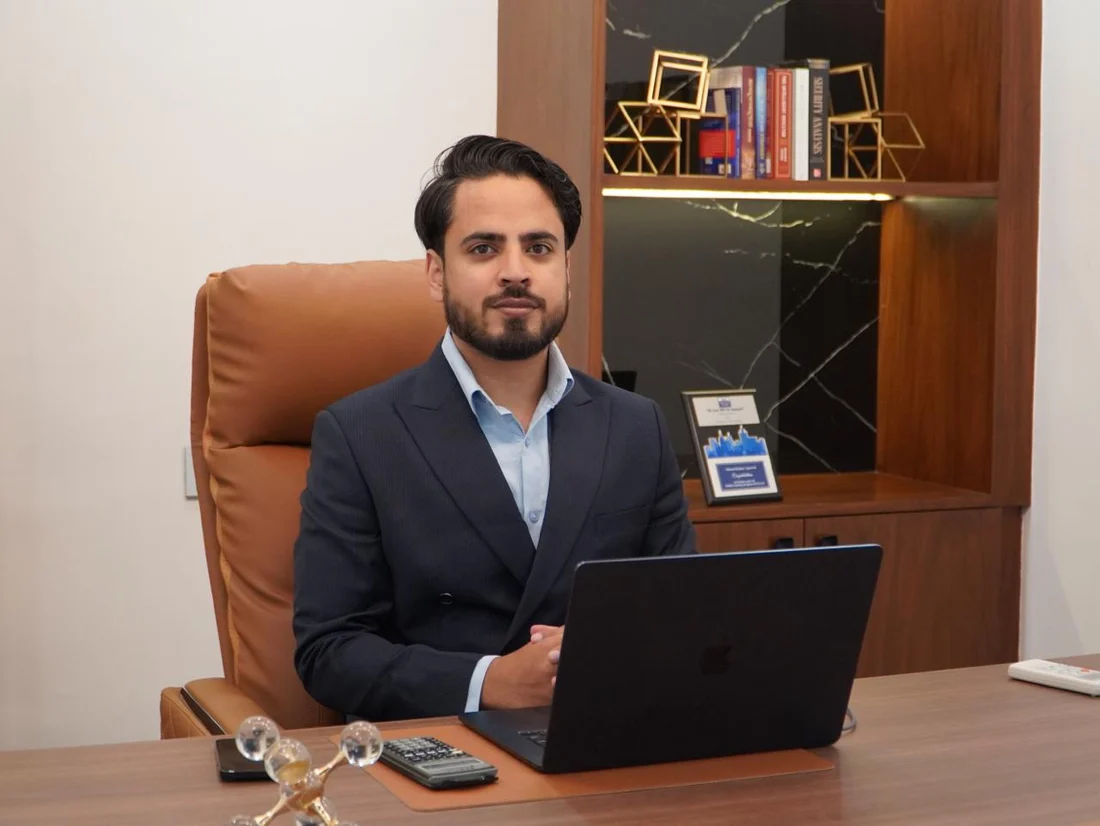
Ishaan founded PMS Sahi Hai to make India's PMS, AIF and GIFT City markets legible to serious investors, comparing every SEBI-registered manager on the same comparative basis, with no shelf products and no commission bias.
Frequently asked
What is the minimum investment required to open a PMS account in India?
SEBI mandates a ₹50 lakh minimum investment for PMS clients, a figure that was doubled from ₹25 lakh following SEBI's November 2019 board decision.
What documents are required to invest in PMS?
At minimum: PAN card (Aadhaar-linked), an identity/address proof such as Aadhaar/passport/driving licence, a recent address proof if your ID is outdated, bank account details, income or net-worth proof, a passport-size photo, a FATCA/CRS self-declaration, and your demat account details. NRIs additionally need a passport, NRE/NRO account details, and overseas address proof.
How long does PMS onboarding take?
There is no single official number. Once documents are complete, KYC and documentation commonly take anywhere from a few working days to around two weeks depending on the provider; counting manager selection and phased capital deployment, the full journey can stretch to six to twelve weeks in some published breakdowns. Providers with more digitised, API-driven processes tend to sit toward the faster end.
Is video KYC accepted for PMS and AIF onboarding?
Yes. SEBI's April 2020 circular permits Video In-Person Verification (VIPV) as a valid alternative to a physical, in-person KYC meeting for securities-market intermediaries, including portfolio managers, alongside Aadhaar e-Sign for documentation.
What is the minimum investment for an AIF compared to a PMS?
AIFs require a minimum of ₹1 crore per investor across Category I, II, and III, under the SEBI (Alternative Investment Funds) Regulations, 2012 double the ₹50 lakh PMS minimum though carve-outs exist for fund/manager employees at a lower threshold.
What happens if my KYC gets flagged or put on hold during onboarding?
This usually happens due to a PAN-Aadhaar linkage issue, an outdated or mismatched address proof, or a KRA validation gap. It's a common, fixable friction point — your PMS or AIF provider (or KRA) will typically specify exactly which document needs to be resubmitted or updated.
Keep reading
All articles
PMS Fees Explained: What You Pay, Step by Step
"2% fixed" and "18% above hurdle" aren't numbers you can compare on their own. Here's every rupee of a PMS fee, deducted step by step GST included across a strong year, a flat year, and a loss year.

Taxation of GIFT City Funds Under Section 10(4D): A 2026 Guide
"GIFT City funds are tax-free" is only true for a specific fund type, held by non-residents, under a formula the industry rarely explains. Here's Section 10(4D), decoded clause by clause.
Green Lantern Capital PMS: Strategy, Returns & Risk Profile
Read it. Now pressure-test it.
Ask Nyra how this applies to your portfolio, or talk to our team, no pitch, no pressure.